✦ Bhartiya Jan Seva Party — Dharma • Vidya • Seva     ✦ धर्मो रक्षति रक्षितः — Dharma protects those who protect it     ✦ वसुधैव कुटुम्बकम् — The World is One Family     ✦ An enlightened citizenry is the foundation of a Dharmic civilization     ✦ सत्यमेव जयते — Truth alone prevails    
धर्म · विद्या · सेवा

Bhartiya Jan Seva Party

धर्म एव हतो हन्ति धर्मो रक्षति रक्षितः ।
तस्माद्धर्मो न हन्तव्यो मा नो धर्मो हतोऽवधीत् ॥
Dharma, if destroyed, destroys us; Dharma, if protected, protects us.
Therefore, let Dharma never be harmed, lest it harm us in turn. — Manusmriti
2026 Founded
28 States Active
7 Core Pillars
1 Unified Vision

Introduction

The Bhartiya Jan Seva Party is founded upon the ideals of the Aryavartha Thesis — a vision of enlightened governance, cultural integrity, and universal harmony rooted in the timeless principles of Dharma. The party believes that true leadership arises not from the pursuit of power, but from wisdom, discipline, humility, and selfless service to the nation. It seeks to build a society where governance is guided by ethics, justice, and compassion, and where progress is balanced with moral responsibility and spiritual consciousness.


Bhartiya Jan Seva Party stands for the preservation and renaissance of Bharat's cultural heritage while embracing scientific advancement and modern innovation for the welfare of all humanity. The party envisions an India where education awakens conscience, citizens uphold dignity and duty, and development exists in harmony with nature and human values. Its mission is to create a Dharmic civilization founded upon truth, service, equality, cultural pride, and universal peace — making Bharat not merely a nation of prosperity, but a guiding light of consciousness and harmony for the world.

The Three Pillars

Vidya — Knowledge

True governance must arise from knowledge. A civilization that invests in the awakening of minds over the accumulation of wealth shall stand eternal. Education is the lamp that banishes ignorance from the hearts of a nation.

Dharma — Righteousness

Dharma is the eternal law of harmony — the code of right conduct that binds society together. When rulers uphold Dharma and citizens live by it, justice flows naturally like a river from its source.

Seva — Service

Selfless service is the highest form of Dharma. A party rooted in Seva sees governance not as power but as responsibility — every citizen a stakeholder, every institution a guardian of the public trust.

The Aryavartha Thesis

A Doctrine of Enlightened Governance, Cultural Integrity, and Universal Harmony

The Aryavartha Thesis envisions a civilization where wisdom governs power, ethics guide progress, and humanity lives in harmony with both nature and the cosmos. Rooted in the timeless principles of Dharma, it seeks not merely to return to the past but to bring ancient clarity into the complexity of the modern age.


Governance, in this vision, is not the exercise of control but the expression of responsibility. True leadership must arise from knowledge (Vidya), restraint (Sanyam), and service (Seva). When power bows before wisdom and authority is tempered by humility, governance becomes an act of enlightened duty rather than domination.


Culture forms the soul of civilization — a living bridge between memory and imagination. To preserve culture is not to freeze it in time, but to refine and reinterpret it with every generation. The Aryavartha Thesis calls for a renaissance of art, language, attire, architecture, and civic manners that combine grace, simplicity, and dignity.


This philosophy affirms the ancient truth: Vasudhaiva Kutumbakam — humanity is one family. Science and spirituality are complementary paths to understanding reality. A harmonious civilization must integrate the insights of the Shastras with the discoveries of modern science, using both to serve all life.

I
Ethical Governance

Authority must be exercised as a sacred trust — tempered by humility, guided by wisdom, and accountable to the people it serves.

II
Cultural Renaissance

Art, language, and civic culture must be preserved and reinterpreted — conscious civilization is eternal civilization.

III
Universal Brotherhood

Vasudhaiva Kutumbakam — the world is one family. Foreign policy must reflect compassion and cooperation without compromising sovereignty.

IV
Conscious Education

Education must awaken conscience, not merely transfer skill. True learning ignites responsibility toward self, society, and nature.

V
Human Dignity

Every person is a temple of the Divine — deserving respect, fairness, and opportunity. Dignity is the breath of Dharma.

The Idol of the Party
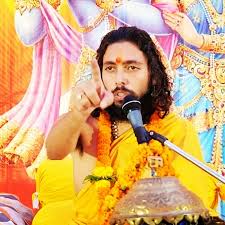
Nigrahacharya Ji
Vidya Dharma Sanyam

Shri Mahamahim Jagadguru Vidyamaartand
Nigrahacharya

(Shree Bhagvatanand Guru)

The title Nigrahacharya is bestowed upon a scholar, teacher, or spiritual guide who specializes in nigraha — the discipline of control, correction, and protection of moral and social order. In traditional Indian philosophical and religious thought, a Nigrahacharya is regarded as a wise authority who guides people toward righteousness, self-discipline, truth, and ethical conduct.


Such a person is revered for deep knowledge of scriptures, strong leadership, and the ability to defend principles against injustice or corruption. The role of a Nigrahacharya is not only to teach spiritual wisdom but also to inspire society to follow duty, culture, and Dharma with courage and integrity — embodying the living ideal of the Aryavartha Thesis.


As the spiritual and philosophical idol of the Bhartiya Jan Seva Party, Nigrahacharya Ji represents the highest aspiration of the party: that governance should be inspired by the same wisdom, compassion, and fearless righteousness that characterizes a true Dharmic sage.
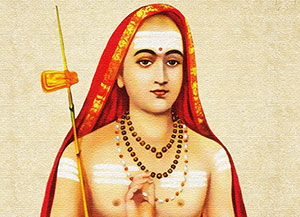


Advait Shankaracharya

Shri Jagadguru Adi Shankaracharya

Adi Shankaracharya was one of the greatest philosophers and spiritual teachers of India. He was born in Kerala and became famous for spreading the philosophy of Advaita Vedanta, which teaches that the soul and the Supreme Being are one. At a very young age, he mastered the Vedas and travelled across India to share his knowledge and debate with scholars.


He established four important monasteries in different parts of the country to promote Hindu philosophy and unity. His teachings emphasized devotion, wisdom, and self-realization. Adi Shankaracharya also wrote many commentaries on sacred Hindu texts such as the Upanishads, the Bhagavad Gita, and the Brahma Sutras.


His contribution greatly influenced Indian culture and spirituality, and he is remembered as a symbol of wisdom and religious reform.
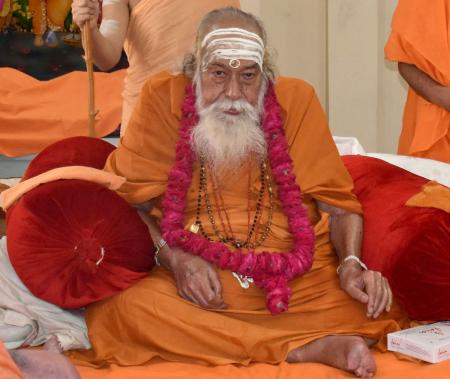
Vedant Krantikaari Shankaracharya Nishta

Shri Jagadguru Shankaracharya Swami Swaroopanand Saraswati

Swami Swaroopanand Saraswati was a respected Hindu saint and spiritual leader who served as the Jagadguru Shankaracharya of the Dwarka and Jyotir Math peeths. Born in Madhya Pradesh, he dedicated his life to religion, spirituality, and social service. During India’s freedom movement, he also took part in activities against British rule and was even imprisoned at a young age.


Swami Swaroopanand Saraswati worked to spread the teachings of Sanatan Dharma and emphasized the importance of peace, truth, and devotion. He guided millions of followers through his speeches, religious teachings, and social efforts.


Known for his simple lifestyle and deep knowledge of Hindu scriptures, he remained an influential spiritual figure in India until his passing in 2022.
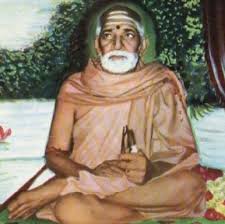


Dharm Baudh Dharmsamrat Gau Rakshak

Shri Dharmsamrat Swami Karpatri

Swami Karpatri, also known as Hariharananda Saraswati, was a famous Hindu saint, scholar, and religious leader known for his deep knowledge of Sanskrit scriptures and dedication to Sanatan Dharma. He was born in Uttar Pradesh and became a monk at a young age, adopting a simple and spiritual lifestyle.


The name “Karpatri” was given to him because he used his hands as a bowl for eating food. Swami Karpatri Ji strongly worked for the protection of Hindu traditions, cow protection, and the promotion of Vedic teachings. He founded the Ram Rajya Parishad political party to support traditional Hindu values in public life.


Through his speeches, writings, and spiritual guidance, he inspired many people across India. He is remembered as a great scholar and defender of Hindu culture and philosophy.

Party Manifesto

Society & Culture
  • Promote national unity and cultural cohesion across all regions and communities of India.
  • Eliminate caste-based discrimination through economically targeted affirmative action.
  • Adopt zero-tolerance policy toward violent and organized crime with full victim support services.
  • Promote cultural harmony and balance within India's heritage, emphasizing ethical governance and social equity.
Defence & Security
  • Strengthen and indigenize Armed Forces to ensure robust defensive capabilities and strategic deterrence.
  • Bolster conventional defence infrastructure and invest in advanced civilian technologies for peaceful energy and space exploration.
  • Foster comprehensive relations with neighboring countries characterized by mutual respect and non-aggression.
  • Support non-proliferation initiatives and international peace frameworks.
Education & Research
  • Revitalize educational excellence through strategic reforms in schools, universities, and vocational training institutions.
  • Enable India to re-emerge as a global hub for learning, innovation, and knowledge production.
  • Integrate Shastraic wisdom with modern scientific inquiry in research institutions.
  • Prioritize moral education alongside technical skill-building across all levels of schooling.
Economy & Industry
  • Provide incentives for 'Make in India' within automobile and automotive component sectors.
  • Adopt strategic import substitution in sectors where export-led growth is feasible.
  • Ensure full and decent employment through MSME support and entrepreneurship incentives.
  • Diversify trade partnerships and facilitate trade through transparent policy frameworks.
Environment & Nature
  • Development must exist in harmony with nature — no prosperity at the cost of ecological destruction.
  • Promote renewable energy and sustainable agriculture rooted in traditional Indian land stewardship.
  • Protect India's rivers, forests, and biodiversity as sacred national assets.
  • Integrate environmental responsibility into all public policy and urban planning.
Governance & Law
  • Implement e-governance initiatives and ensure independent oversight of law enforcement institutions.
  • Undertake comprehensive police reforms prioritizing accountability, training, and community trust.
  • Any proposal regarding a change in the country's name proceeds only after thorough democratic and constitutional consultation.
  • Strengthen anti-corruption frameworks with transparent, citizen-accessible enforcement mechanisms.

Join the Movement for Dharmic Civilization

Every conscious citizen who believes in truth, service, and the dignity of all life is welcome. This is not merely a party — it is a mission.

Become a Member

Contact & Connect

Headquarters

Discord, Website and Youtube

SEND A MESSAGE / JOIN THE PARTY